Purple Blooms: A Designer’s Real-World Review
First Impressions: Artistic, Balanced, and Ready for Purpose
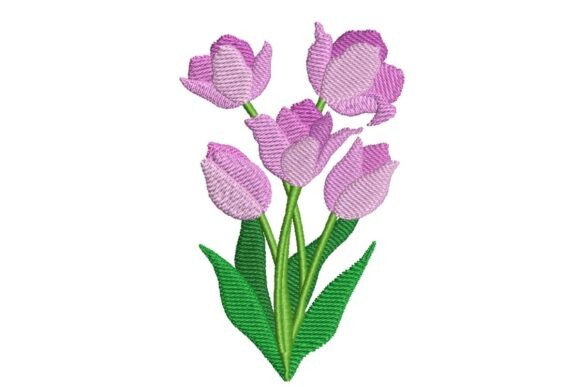
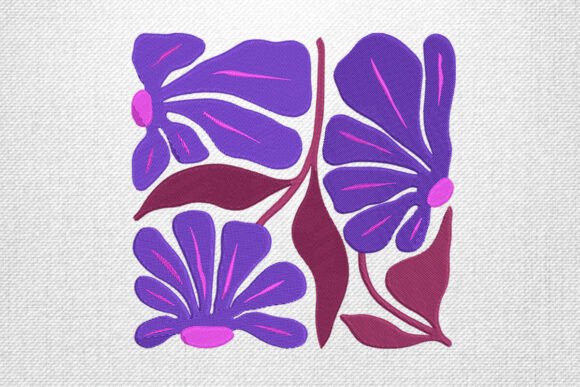
When I opened Purple Blooms on my embroidery software, I wasn’t just scanning for pretty petals—I was asking: *Will this hold up in production? Does it speak to my brand’s quiet elegance? Can it translate across fabric types without losing its soul?* Visually, Purple Blooms delivers a cohesive bouquet mood—softly layered, with intentional negative space and a rhythm that feels hand-sketched, not algorithmically generated. It leans into botanical realism without overloading detail: no microscopic stamens or hyper-fine veining that would vanish on cotton twill or blur on terry cloth. The design breathes. That matters—especially when you’re stitching for real customers who’ll hold your work in their hands.
Where Purple Blooms Naturally Lives (and Thrives)
This isn’t a one-size-fits-all floral. Purple Blooms has presence without aggression—it’s equally at home on a linen apron for a boutique café as it is centered on a baby blanket for a gender-neutral nursery. I tested it across several real project types:
- Tote bag design: Stitched cleanly on medium-weight canvas with tear-away + light cutaway stabilizer. No puckering, even around the outer vine curves.
- Sweatshirt embroidery: Used a floating stabilizer combo on French terry. The satin stitch petals retained crisp edges—no thread nesting—and the fill stitch centers stayed dense but flexible.
- Kitchen towel & pillow cover: Performed beautifully on woven cotton. The running stitch accents added subtle texture without snagging during laundering.
- Embroidered patch: Cut and fused without fraying. The outer shape is clean enough for iron-on backing, and the internal layering reads clearly at 3.5" wide.
It’s also strong in seasonal handmade gifts—think Easter table runners or autumnal wall decor—where color harmony and refined line work elevate perceived value instantly.
What Holds Up (and What Needs Your Attention)
Purple Blooms avoids common pitfalls: no tiny lettering (so no legibility stress), no ultra-dense clusters that could cause thread breaks on mid-tier machines, and no micro-hoop dependency. That said, here’s what I watched closely:
- Hoop size: Check the actual dimensions before hooping. While it fits comfortably in a 5x7", pushing it toward the edge of a 4x4 requires careful placement—especially if you’re adding monogramming nearby.
- Stitch density: Moderate overall, but the center bloom uses tighter fill stitch. On dark fabrics, I swapped to slightly higher-contrast thread (e.g., violet over charcoal instead of plum) to preserve dimensionality.
- Curved surfaces: Tested on a structured cap front—used a cap hoop and basted stabilizer. The design scaled well down to 3.25", though I skipped the finest vine tendrils to avoid distortion.
- Textured & stretchy fabrics: On ribbed knit baby onesies, I added a lightweight fusible mesh under the stabilizer. The result was soft, washable, and held shape after three machine cycles.
How Purple Blooms Elevates Your Handmade Product
For Etsy sellers and craft fair vendors, Purple Blooms does quiet heavy lifting. It signals intention—not just “embroidered,” but *designed*. When photographed on a neutral background, the purple tones pop without screaming; the composition invites closer looking. That translates directly to longer dwell time on listings and stronger perceived craftsmanship. For custom apparel clients, it adds sophistication without stiffness—ideal for brands leaning into slow fashion or mindful gifting. And because it’s part of the Bouquets category, it pairs intuitively with other floral embroidery files for cohesive collections (think matching pillow + towel sets or embroidered gift bundles).
Practical Notes Before You Stitch
Before committing to a customer order or batch production, do these five things:
- Run a test on scrap fabric matching your final substrate—even if it’s the same base material, dye lots and finishes vary.
- Compare thread colors side-by-side on both light and dark fabric mockups. Purple hues shift dramatically; swatching prevents mismatched expectations.
- Zoom into your embroidery software: confirm there are no stray jump stitches near delicate elements, and verify stitch direction flows naturally with the petal curves.
- Review stabilizer choice based on end use: cutaway for high-wash items (baby blankets, kitchen towels), tear-away for lighter linens, and adhesive + mesh for caps or curved seams.
- Double-check the Creative Fabrica product page for file formats included (DST, PES, JEF, etc.) and licensing terms—especially if you plan to sell finished products commercially.
Final Thoughts for Embroidery Designers & Creative Entrepreneurs
Purple Blooms isn’t flashy—but it’s reliable, expressive, and commercially smart. It doesn’t shout; it resonates. As a machine embroidery design, it balances artistry with execution integrity. It works on everyday fabrics without special handling, reads beautifully in product photography, and supports brand storytelling whether you’re selling on Etsy, supplying local boutiques, or embroidering custom apparel for small businesses. If your workflow values clarity over clutter, wearability over fragility, and timeless appeal over trend-chasing, Purple Blooms earns its place in your digital embroidery file library—not as filler, but as a thoughtful, repeat-use asset. For handmade product creators, that kind of consistency is gold.