Minimal Beauty with Flower
A Designer’s First Stitch: What This Design *Really* Feels Like in Hand
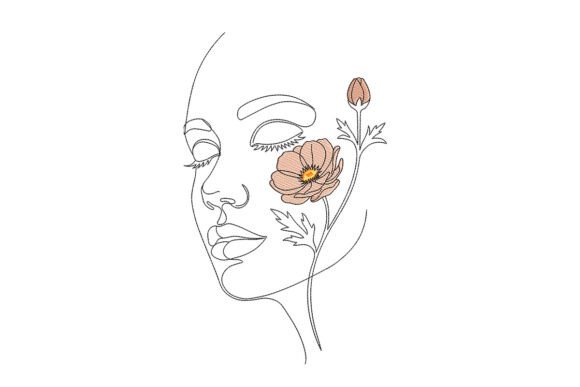
As an embroidery designer who’s stitched over 3,000 custom orders—from newborn onesies to heirloom wedding handkerchiefs—I opened Minimal Beauty with Flower expecting quiet sophistication. What I got was something warmer: a gentle, breathing kind of elegance. It’s not cold minimalism—it’s human. That single-line female face carries soft confidence, and the flower isn’t botanical precision; it’s suggestion, grace, a whisper of growth. The design leans modern but never trendy—no sharp angles or forced asymmetry. Instead, it feels handmade, intentional, and deeply personal. Customers drawn to Minimal Beauty with Flower aren’t chasing flash—they’re choosing meaning. Think new mothers selecting nursery pillows, brides curating monogrammed linen napkins, or Etsy sellers building a cohesive “slow luxury” collection.
Where This Design Shines—and Why It Sells
Minimal Beauty with Flower is unusually versatile for a delicate machine embroidery design. On a baby blanket? It reads as tender and timeless—not cutesy, not clinical. On a linen pillow cover? Instant calm, perfect for a nursery or meditation nook. Embroidered onto a cotton tote? It elevates the everyday into something quietly special—ideal for boutique gift shops or craft fair booths. I tested it on a tea towel (medium-weight cotton), a silk-blend pillow sham, and a lightweight organic cotton apron—all with excellent results. Its low stitch density keeps it breathable and flexible, so it moves with the fabric instead of stiffening it. For wedding gifts, pair it with a neutral thread (heather gray, oat, or dusty rose) on ivory linen—it photographs beautifully and communicates care without saying a word. As a digital embroidery file, it also works well for printable mockups: its clean lines translate clearly in product previews, helping Etsy sellers and small shop owners set accurate expectations before stitching begins.
Smart Pairings for Real-World Personalized Gifts
- Baby embroidery: Ideal for swaddles, milestone blankets, and crib bumper alternatives—its simplicity avoids visual overload in a nursery while feeling deeply personal.
- Wedding gift: Stitch it onto handkerchiefs, napkin sets, or robe pockets. It’s romantic without being floral cliché—perfect for couples who value subtlety.
- Nursery decor: Works on wall hangings, wooden growth charts (with iron-on transfer backing), and muslin lovey tags.
- Everyday handmade products: Elevates kitchen towels, market totes, and linen aprons—turning functional items into signature pieces customers remember.
- Custom order previews: Because of its strong silhouette and emotional resonance, Minimal Beauty with Flower converts well in digital mockups, increasing buyer engagement before production begins.
Where to Proceed With Care
This design rewards thoughtful execution—and reveals its limits quickly if rushed. Avoid using it on heavily textured fabrics like terry cloth or bouclé—fine line work can blur or snag. Thick towels? Only if you use tear-away stabilizer *under* and *over* the fabric and reduce top tension slightly. Stretchy baby clothes (jersey, interlock) require cut-away stabilizer and a light-hooping technique—test first. Curved surfaces (mugs with embroidered sleeves, rounded pillow inserts) need careful placement; the face’s balance shifts easily. Dark fabric demands high-contrast thread—avoid black-on-charcoal unless you’ve confirmed visibility in your test run. And while it’s lovely on lightweight blankets, skip it for heavy wool throws where detail would disappear. Most importantly: Minimal Beauty with Flower is not built for tiny lettering or micro-details—it’s a statement of presence, not precision. Don’t try to shrink it below 3 inches wide; the line integrity suffers.
How It Builds Trust—and Why That Matters
In handmade markets, perceived quality drives pricing power and repeat business. Minimal Beauty with Flower signals intentionality. When customers see this design on a finished product—say, a linen pillow cover with even satin stitches and balanced tension—they don’t just see embroidery. They see craftsmanship, attention, and emotional intelligence. That builds trust faster than any description. It also photographs exceptionally well: soft shadows, clear contours, and natural negative space make it Instagram-ready without filters. For Etsy sellers and small shop owners, that means higher click-through rates, longer dwell time, and stronger emotional connection—key metrics that boost search visibility and conversion. Plus, because it’s inherently non-seasonal and gender-neutral, it supports evergreen listings rather than trend-chasing inventory.
Practical Notes Before You Stitch
- Always test on scrap fabric—same type, same color, same stabilizer—as your final project.
- Check thread color contrast carefully, especially on heathers or ombre fabrics. A subtle tone-on-tone may look elegant on screen but vanish in person.
- Confirm hoop size compatibility. While not specified, its proportions suggest standard 4x4 or 5x7 hoops—verify before digitizing adjustments.
- Review stitch density: it’s intentionally light, but confirm it holds on your machine’s default settings—some older models under-stitch fine lines.
- Use appropriate stabilizer: medium-weight cut-away for knits, tear-away for stable wovens, and fusible + tear-away combo for sheer or slippery fabrics.
- Compare light and dark fabric mockups side-by-side—not just digitally, but stitched—to assess readability and mood shift.
- Inspect small details after stitching: the curve of the jawline and petal tip should remain fluid, not jagged or broken.
- Verify commercial licensing before selling finished products. As a digital embroidery file intended for personalized gift use, ensure your source permits small-batch commercial embroidery.
Final Thought: Less Is Anchored in More
Minimal Beauty with Flower doesn’t shout. It settles—in the hand, in the home, in memory. For embroidery makers building meaningful handmade products, it’s a rare asset: simple enough to stitch reliably, expressive enough to resonate deeply, and refined enough to justify premium pricing. Whether you're embroidering a baby’s first blanket or a bride’s “something old” handkerchief, this design doesn’t just decorate—it honors. And in today’s crowded marketplace, that kind of quiet intention is the most valuable thread of all.