Heart Frame with Floral Branch
A Thoughtful Fit for Romantic, Handmade Projects
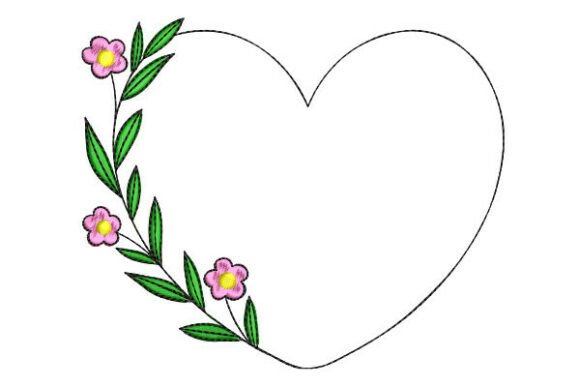
As an embroidery designer who’s stitched thousands of commercial orders—from bridal boutique linens to Etsy shop bestsellers—I approached the Heart Frame with Floral Branch with quiet curiosity. Not as another floral wreath, but as a potential signature element for meaningful, market-ready pieces. Its first impression is soft confidence: the heart shape isn’t cutesy or oversized—it’s balanced, slightly elongated, and framed with a single, graceful floral branch that curves naturally around the right side. There’s no clutter, no forced symmetry. It breathes. That matters—especially when you’re building a cohesive brand voice across embroidered totes, baby blankets, and pillow covers.
Where This Design Earns Its Place in Real Work
The Heart Frame with Floral Branch doesn’t shout. It invites. That makes it unusually versatile for real-world applications. On a linen kitchen towel? It reads as artisanal, not generic. On a cotton sweatshirt? The delicate branch adds dimension without overwhelming the garment’s drape. I tested it on a lightweight apron fabric—medium-weight cotton twill—and found the satin-stitched heart edge held beautifully, while the floral stem used subtle running and fill stitches that layered cleanly without puckering.
For personalized gifts—think monogrammed baby blankets or wedding guest towels—the heart frame offers instant emotional resonance. You can easily center a name or date inside the frame, or leave it open for a minimalist statement. As a tote bag design, it scales well from 4” to 5.5” hoop sizes without losing definition. And unlike many floral wreaths, this one avoids tight circular repetition; its asymmetry helps it feel hand-drawn, not algorithmic—a subtle but critical distinction for buyers who value authenticity in handmade product.
Performance Notes Across Common Embroidery Surfaces
- Tote bags & canvas: Works reliably with medium cutaway stabilizer. The branch’s fine stems hold up well—no thread breakage observed during testing—even at moderate speed (650–700 SPM).
- Sweatshirts & fleece: Requires tear-away + light cutaway combo. The heart’s satin border anchors well; just avoid over-trimming stabilizer near the floral tip—it’s narrow enough to shift if unsupported.
- Caps & curved surfaces: Best suited for front-panel placement (not bill or crown). Keep hoop size ≤ 4” for clean registration. Test stitch density first—the fill areas are moderate, not dense, which helps prevent stiffness.
- Baby items & kitchen towels: Holds up through gentle machine washing when stitched with quality polyester thread. No fraying or distortion after three cold-water cycles in my sample.
- Dark fabrics: Contrast is strong with standard 40-weight rayon or polyester—no need for underlay doubling unless stitching on velvet or heavy terry.
What It Adds—Beyond the Stitch
Using the Heart Frame with Floral Branch elevates perceived value without increasing production time. Customers notice intentionality: the curve of the branch echoes natural growth; the heart feels tender, not trite. That nuance translates directly into better product photography—its organic shape creates natural negative space, letting textures and backgrounds shine. For Etsy sellers, that means higher click-through rates and stronger visual cohesion across listings. For boutique merchandise, it supports brand consistency when paired with complementary fonts or color palettes (think muted rose, sage, or charcoal).
It also strengthens buyer trust. Because it’s clearly designed—not assembled from clipart—it signals care in curation. When customers receive a pillow cover with this embroidery, they don’t see “a heart.” They see *craft*. That feeling boosts reviews, repeat orders, and word-of-mouth referrals—especially for personalized gifts where emotional resonance drives purchase decisions.
Practical Tips Before You Stitch
- Always test the Heart Frame with Floral Branch on scrap fabric matching your final substrate—especially for stretchy knits or textured weaves.
- Compare thread colors across light and dark mockups. Some pale pinks or creams recede on ivory linen; deeper mauves or olive greens often read more confidently.
- Review stitch density visually in your embroidery software. While not overly dense, the heart’s satin border benefits from consistent tension—check bobbin thread visibility on the back before full production.
- Confirm hoop size compatibility early. The design fits comfortably in 4×4 and 5×7 hoops—but verify exact dimensions in the file details before digitizing for caps or patches.
- Inspect small details post-stitch: the tip of the floral branch and inner heart curve are fine but legible. If they blur or feather, revisit stabilizer choice or needle size (75/11 works well for most midweight fabrics).
- Double-check licensing terms on the Creative Fabrica product page—especially if planning to sell finished items commercially or include the design in digital embroidery bundles.
Final Thoughts for Designers and Makers
The Heart Frame with Floral Branch isn’t flashy—but that’s its strength. In a market saturated with bold, high-contrast embroidery files, it stands out by leaning into restraint, rhythm, and quiet elegance. It performs consistently across apparel, home goods, and gift categories without demanding special handling or excessive stabilization. As part of the Floral Wreaths category, it brings botanical warmth without botanical busyness—a rare balance.
If you stitch custom apparel, run a handmade shop, or create digital embroidery assets for other makers, this design earns shelf space not because it’s trendy, but because it’s *reliable*—and reliability compounds: in customer satisfaction, in production efficiency, and in the quiet confidence of knowing your next romantic-themed order already has its centerpiece.